

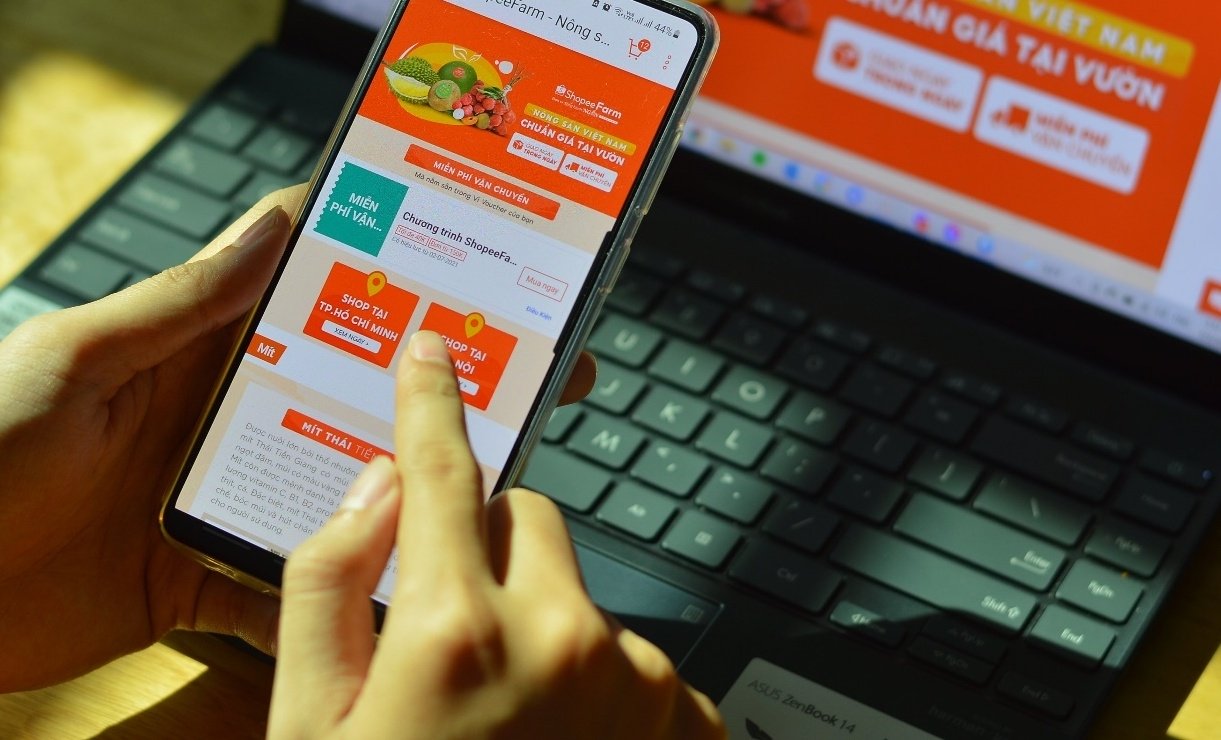
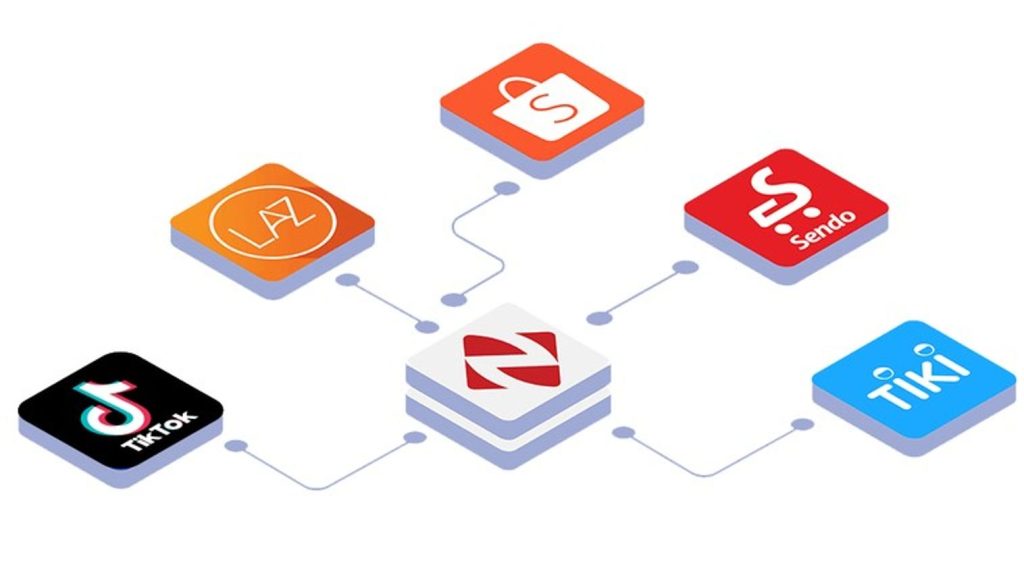
Vietnam’s e-commerce market exceeded $27.7 billion in 2025 — a 19.4% year-on-year jump that few analysts predicted at this scale. Combined sales on Vietnam’s four biggest platforms — Shopee, TikTok Shop, Lazada, and Tiki — hit $11.62 billion in just the first nine months of 2025, a 34.4% increase over the same period the year before.
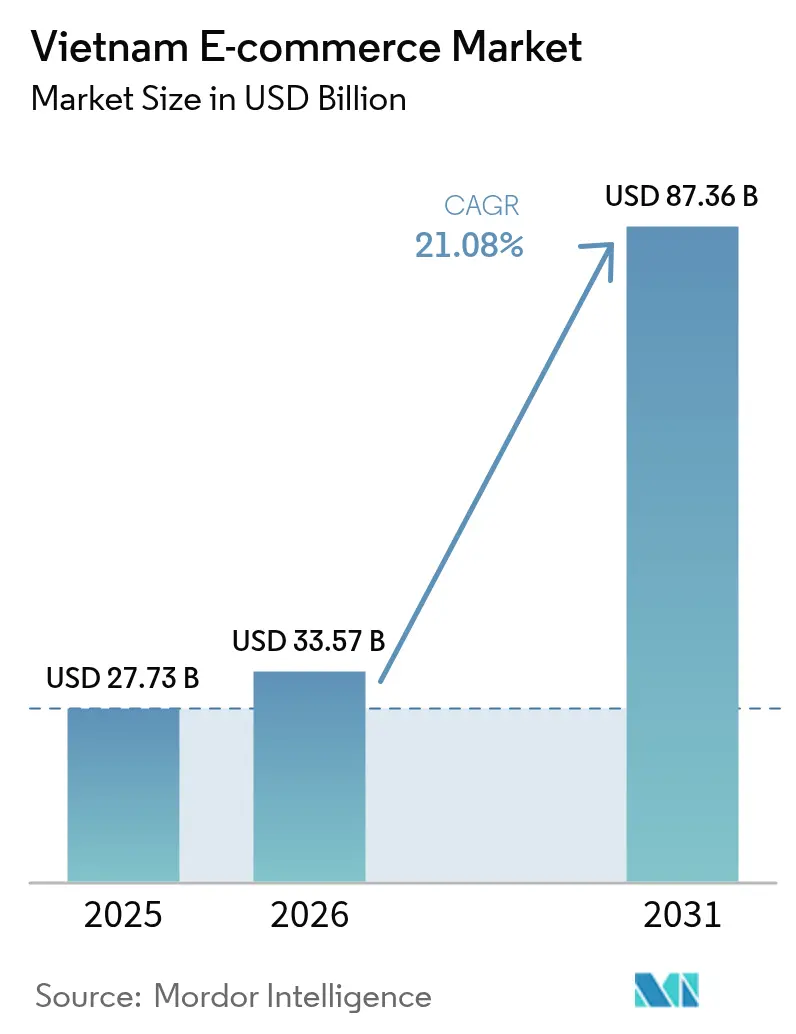
By 2026, the market is forecast to reach $33.57 billion. By 2031, analysts project $87 billion.
For Chinese suppliers and e-commerce operators, this growth curve tells a simple story: Vietnam is one of the most accessible, fastest-growing digital commerce markets in Southeast Asia — and the window to enter before competition intensifies is narrowing.
This guide explains what’s driving the boom, why the China-to-Vietnam dropshipping model works structurally, which platforms and product categories offer the clearest opportunity, and what the logistics setup actually needs to look like to make it work at scale.
Why Vietnam’s E-commerce Market Is Different from Other SEA Markets
Southeast Asia has several fast-growing e-commerce markets. Vietnam stands out for a specific combination of structural factors that make it unusually well-suited to China-sourced dropshipping.
Young, digitally-native population. Vietnam has a median age of 31. Gen Z and millennial consumers drive the dominant share of platform activity — and they are TikTok-native buyers who discover products through livestream commerce, short-form video, and social feeds rather than search engines. That behaviour pattern is identical to China’s domestic e-commerce consumer base from 2018–2020.
Rapid payment infrastructure. Card-less transactions in Vietnam grew 63.3% in volume in 2024. QR code payments jumped nearly tenfold. The Vietnamese government’s National Cashless Payment Development Project has pushed 79% of food-service outlets and 74% of retail stores to accept digital payments. The checkout friction that killed conversion in other developing markets has largely been removed.

Platform concentration. Vietnam’s e-commerce is dominated by four platforms — Shopee, TikTok Shop, Lazada, and Tiki. This concentration is an advantage for Chinese dropshippers: you don’t need to understand a fragmented marketplace. You need to master one or two platforms.
Live commerce adoption. Vietnam’s live e-commerce market is projected to reach $11 billion by 2026, with an annual growth rate of 11%. Seven out of ten Vietnamese internet users have watched livestreams, and half have made a purchase during or after one. Chinese suppliers who understand Taobao Live or Douyin’s shopping mechanics are entering a market where the same consumer behaviour is already established.
The China Supply Chain Advantage in Vietnam
Vietnam’s manufacturing base has grown significantly over the past decade — but it cannot match the depth, variety, or price points of China’s production ecosystem for most consumer product categories.
The price gap between Chinese factory output (especially from 1688.com) and Vietnamese wholesale is material across:
- Consumer electronics accessories
- Fashion and apparel
- Home and kitchen goods
- Beauty and personal care
- Toys and lifestyle products
A product selling on Shopee Vietnam for VND 200,000 (~$8 USD) often has a 1688 source price of ¥15–25 (~$2–3.50 USD). After China-Vietnam freight (typically $1–3/kg via express postal or economy air), the margin structure supports a sustainable dropshipping operation — provided the logistics are set up correctly.
The critical operational advantage Chinese dropshippers have over local Vietnamese sellers is product range. A Vietnamese domestic seller is constrained by what’s locally available at price. A Chinese-supply-chain dropshipper can offer thousands of SKUs that don’t exist in the local wholesale market, at prices local competitors cannot source.
The 3 Platforms That Matter for China-Vietnam Dropshipping
Shopee Vietnam — The Volume Platform
Vietnam’s e-commerce market is booming, with Shopee Vietnam leading in traffic and market share. Both local Vietnamese entrepreneurs and international sellers are eyeing Shopee Vietnam as a prime platform for dropshipping.
Shopee dominates Vietnamese e-commerce by user count and transaction volume. For Chinese dropshippers, the practical setup is:
- Register a Shopee Vietnam seller account (cross-border seller program available)
- Source products from 1688 or AliExpress
- Use a China-based fulfillment partner who ships daily to Shopee’s Vietnam warehouse, or ships direct-to-consumer via economy express
Key Shopee Vietnam metrics:
- Minimum seller rating requirements apply — order fulfillment speed directly affects search ranking
- Shopee’s algorithm rewards consistent shipping times, not just price
- Free shipping thresholds heavily influence conversion — factor the promotion cost into your margin model
TikTok Shop Vietnam — The Growth Platform
TikTok Shop now holds a 24% share among the highest-revenue e-commerce platforms in Vietnam. It launched in Vietnam in 2022 and has grown at a rate that surprised even regional analysts.
TikTok Shop’s model is content-driven commerce: products are discovered through short videos and livestreams, not search. This creates a specific opportunity for Chinese suppliers:
- Products that demonstrate well on video — gadgets, kitchen tools, beauty devices, apparel with visual styling appeal — outperform static product categories
- Impulse purchase price points ($5–$25 USD) convert best in livestream contexts
- Influencer (KOL) partnerships are the primary customer acquisition channel — working with mid-tier Vietnamese KOLs (50k–500k followers) is more cost-effective than top-tier partnerships for testing new products
TikTok Shop has exploded in Vietnam, especially among Gen Z and millennial buyers who engage through livestream shopping. It requires consistent marketing effort and content creation to maintain visibility.
Lazada Vietnam — The B2B Bridge
Lazada (owned by Alibaba) has a built-in structural advantage for Chinese sellers: the platform’s LazMall and cross-border seller programs are explicitly designed to onboard Chinese brands and suppliers. For Chinese operators who already sell on Tmall or Taobao, the seller backend will be familiar.
Lazada’s Vietnam market share is smaller than Shopee’s, but its average order value is higher — making it more suitable for mid-range product categories ($15–$60 USD range) than the impulse-buy dynamics of TikTok Shop.
Product Categories With the Strongest China-Vietnam Dropshipping Margin
Not every product category works equally well. These five categories consistently show the best combination of demand, China supply availability, and margin structure:
1. Fashion and apparel Vietnam’s fast-fashion appetite is enormous. Categories such as furniture, apparel, home and kitchen, and personal care are expanding at rates far above the global average. China’s Guangzhou garment district produces the same product types that dominate Vietnamese platform sales, at 3–5x lower unit cost than local wholesale.
2. Consumer electronics accessories Phone cases, charging cables, earbuds, and smart home accessories — consumer electronics led with 26.35% of Vietnam e-commerce market share in 2025. Shenzhen’s electronics supply chain has no equivalent in Vietnam. Delivery times of 5–10 days via economy air are competitive with local warehouse stock.
3. Beauty and personal care Skincare, hair tools, and cosmetics are the fastest-growing TikTok Shop category in Vietnam. Chinese beauty brands (especially those with factory-direct access) can enter at price points that local brands cannot match.
4. Home and kitchen Practical household goods — storage solutions, kitchen gadgets, organisers — have consistent demand with low return rates. These products photograph well, ship compactly, and have clear utility-based selling points that work in both video and static formats.
5. Toys and children’s products Vietnam’s young demographic (median age 31, high birth rate) drives strong demand for children’s products. Chinese toy manufacturers supply the global market from the same factories — price advantage is structural.
The Logistics Setup That Actually Works
This is where most China-to-Vietnam dropshipping operations fail. The product selection and platform strategy can be correct — and the business still loses money if the logistics chain isn’t structured properly.
Option 1: Direct Postal / Economy Express (Small Volume)
For order volumes under 50 units per day, direct postal channels from China to Vietnamese consumer addresses are viable:
- China Post / ePacket equivalent: 10–20 days, lowest cost (~¥15–30/kg), acceptable for low-value goods
- Economy air express (e.g. 4PX, Yanwen): 7–15 days, slightly higher cost, better tracking
Limitation: As volume scales, tracking reliability, delivery success rates, and customer service become serious operational problems. Economy postal channels work for testing; they don’t scale cleanly.
Option 2: Freight Forwarder + Vietnam Last-Mile (Mid Volume)
For 50–500 daily orders, a dedicated China-Vietnam freight forwarder with Vietnam last-mile partnerships is the standard professional setup:
- Goods consolidate at a China warehouse (Guangzhou, Shenzhen, or Yiwu)
- Daily or twice-weekly air freight to Ho Chi Minh City or Hanoi
- Vietnam-side last-mile via GHTK, J&T Express, or Viettel Post
Transit time: 3–7 days China to Vietnamese consumer door Cost: Approximately ¥20–45/kg all-in depending on route and volume
This is the setup that makes 5–10 day delivery promises to Shopee and TikTok Shop customers achievable — which directly affects your seller rating and search ranking.
Option 3: Vietnam Bonded Warehouse (High Volume)
For established sellers with predictable bestsellers, pre-positioning inventory in a Vietnam bonded warehouse eliminates international transit entirely for those SKUs:
- 1–2 day domestic Vietnam delivery
- No customs delay risk on individual orders
- Higher upfront inventory commitment — only suitable for proven SKUs
Most serious China-Vietnam dropshippers run a hybrid: warehouse stock for top 20 SKUs, direct-from-China fulfillment for the long tail.
5 Operational Rules for China-Vietnam Dropshipping in 2026
1. Your shipping speed is your seller score. Both Shopee and TikTok Shop rank sellers partly on fulfillment speed and on-time delivery rate. A freight setup that delivers in 5–7 days consistently outperforms a cheaper setup that delivers in 12–15 days irregularly — because the ranking algorithm compounds. Invest in logistics quality before cutting logistics cost.
2. Source from 1688, not AliExpress, for margin. On 1688, prices are significantly lower than retail platforms. The challenge is that suppliers only speak Chinese and don’t ship to Shopee warehouses directly — the solution is a sourcing agent or freight forwarder who bridges the gap. The margin difference between 1688 sourcing and AliExpress sourcing on the same product is typically 20–40%.
3. Test with small batches before committing to stock. Vietnam’s platform algorithms reward new listings differently from established ones. Test 3–5 units of a new product via direct-from-China fulfillment before pre-positioning 100+ units in a Vietnam warehouse. The market’s taste preferences are not identical to Chinese domestic consumer preferences.
4. Localise your listings, don’t translate them. Vietnamese buyers on Shopee and TikTok Shop respond to content written in natural Vietnamese, not machine-translated Chinese. Invest in a Vietnamese-language listing service or work with a local partner for product descriptions and video captions. It directly affects conversion rate.
5. Build your customs compliance into the freight model from day one. Vietnam’s regulatory environment for cross-border e-commerce is evolving. The proposed E-Commerce Law 2025 increases platform liability and tightens rules on cross-border imports. Working with a freight forwarder who handles customs declaration correctly — declared value, HS code, commercial invoice — protects you from enforcement actions that are becoming more common as Vietnam’s customs authority scales up.
The Window Is Narrowing
Vietnam’s e-commerce market in 2026 is where Thailand was in 2021 and where China was in 2015: consumer adoption is accelerating, platform infrastructure is maturing, and the supply chain gap between what’s locally available and what consumers want is still wide enough for Chinese suppliers to fill profitably.
Vietnam’s e-commerce remains one of the region’s most compelling growth markets for businesses and investors with a clear strategy and strong market insight.
The operators entering now — with the right product selection, a reliable China-Vietnam logistics chain, and platform-native content — are building the seller ratings and supply chain infrastructure that will be significantly harder to replicate in 18 months when competition intensifies.
The supply chain advantage is real. The market opportunity is real. The logistics setup is the variable that separates sellers who scale from sellers who stall.
Published: June 2026 Sources: Mordor Intelligence Vietnam E-commerce Market Report (2026); Vietnam Briefing E-commerce Sector Outlook (November 2025); Payments CMI Vietnam E-commerce Data (2025); CJ Dropshipping Shopee Vietnam Guide (October 2025); Research and Markets Vietnam B2C Databook Q4 2025